 Dynamo Sports Center
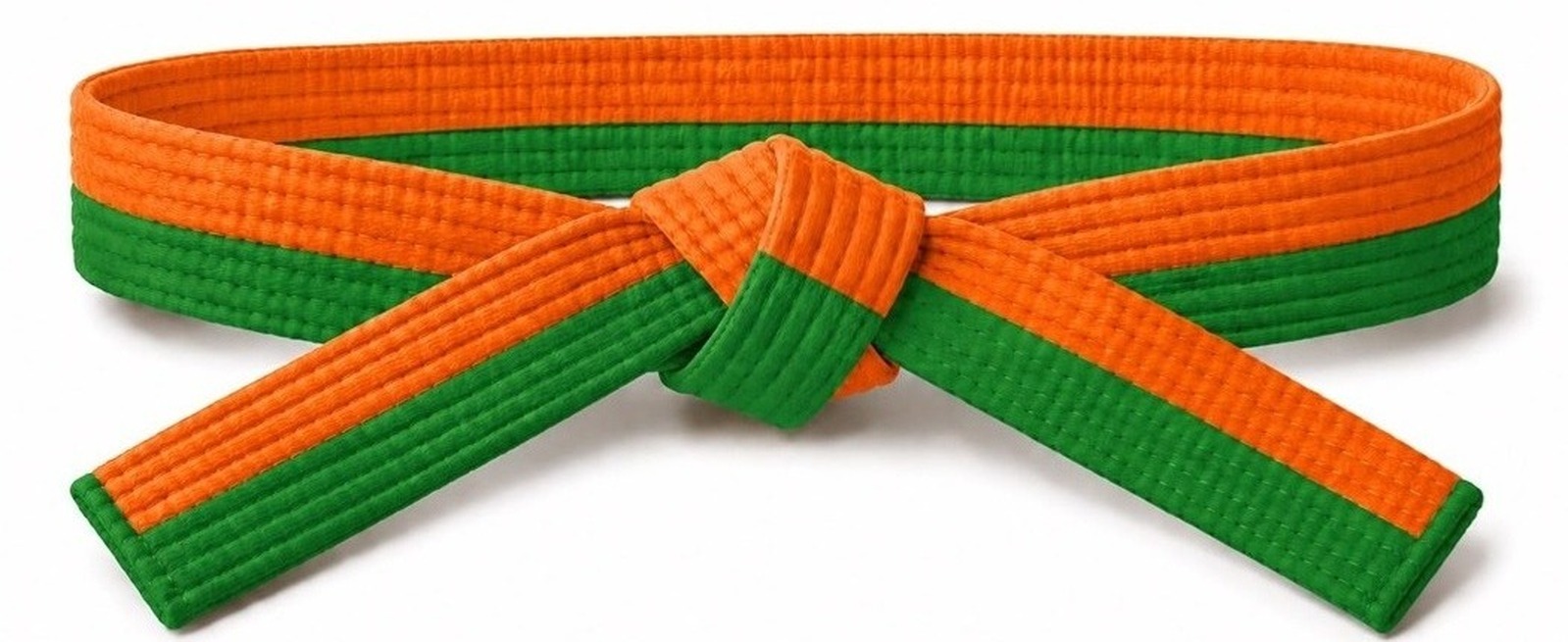
6th Rokyu (orange/green belt)
JUDO RANK PROMOTION EXAM
# 6ᵗʰ Rokyu (orange/green belt)
| Fundamentals of standing judo | Ashi Waza | Koshi Waza | Te Waza | Kata Waza | Fundamentals of judo floor | Sutemi Waza | Katame Waza | Kansetsu Waza | Shime Waza |
|---|---|---|---|---|---|---|---|---|---|
|
Tendoku renshu
Sotai renshu |
De ashi barai
Uchi mata | Renraku wazai |
Base of detentions
Base chokes output chokes | Tomoe nage | Combinations |
Kata juji jime
Hadaka juji jime Gyaku juji jime |
The 6th Rokyu (Orange/Green Belt) represents the transition from fundamental skills to intermediate-level judo. At this stage, students are expected to demonstrate greater technical precision, stronger coordination, and the ability to combine techniques while maintaining proper balance, timing, and control.
Training focuses on improving throwing combinations, refining foot techniques, and developing more advanced groundwork. Students also begin learning sacrifice throws and introductory choking techniques while continuing to strengthen their understanding of judo principles.
To earn the 6th Rokyu (Orange/Green Belt), students demonstrate proficiency in the following areas:
- Fundamentals of Standing Judo: Tendoku Renshu and Sotai Renshu.
- Ashi Waza (Foot Techniques): De Ashi Barai and Uchi Mata.
- Koshi Waza (Hip Techniques): Renraku Waza (Combination Techniques).
- Fundamentals of Judo Groundwork (Ne Waza): Fundamentals of pins and the basic mechanics of choke entries and escapes.
- Sutemi Waza (Sacrifice Techniques): Tomoe Nage.
- Katame Waza: Holding combinations and transitions between pins.
- Shime Waza (Choking Techniques): Kata Juji Jime, Hadaka Juji Jime, and Gyaku Juji Jime.
These techniques help students connect standing attacks with groundwork, develop combination techniques, and improve their overall understanding of offensive and defensive judo. Mastering these skills prepares young judoka for the more advanced technical requirements of the Green Belt level.
At Dynamo Sports Center, students follow a structured curriculum with clearly defined objectives for every belt level. Promotion to the 6th Rokyu (Orange/Green Belt) is based on technical proficiency, safe execution of techniques, discipline, attendance, consistent effort, and a solid understanding of judo principles.
The 6th Rokyu (Orange/Green Belt) is an important milestone that demonstrates a student's growing technical ability, confidence, and readiness to advance toward the intermediate stages of the children's judo belt ranking system.